Showing posts with label Greece. Show all posts

Thursday, 29 March 2012

When should you plan your wedding in Halkidiki?

Personally I love late spring in Greece. May and June are the perfect months as everywhere is fresh green with masses of flowers. The smell of the air is so wonderful then.

It is always best to avoid the school holiday period, unless you like scorching heat coupled with inflated prices, packed streets and beaches. August is particularly busy because Greeks, along with other continentals, have the whole month off.

Kriopigi Beach - halkidiki.com
September is an excellent month for your wedding, with hot weather (but not sizzling!) and no crowds. October is the end of the season and so the weather starts to cool a little but is still likely to be delightful. If you have a hankering for a winter wedding then get married in the northern snows of Greece.


Copyright M. Christara
The main season in Greece runs from April to October. Hotels, restaurants, shops and other tourist attractions are usually closed outside of these months. Easter usually kicks off the season, although if this falls very early in March there may be few facilities open. This is mainly connected to weather conditions. Charter flights do not run to many Greek destinations in the winter, except to Athens and Thessaloniki. Many apartments do not have heating, so you can see why Greece has traditionally been a summer destination. Hotels, especially luxury properties, conference/event venues and ski hotels will of course have heating as well as air conditioning but not all find it financially viable to stay open for the winter season.
Courtesy of Danai Beach Resort & Spa
But times are changing. For marriages with style, you can now hold your wedding at any time of year in Halkidiki. Many 5 star hotels are now opening throughout the winter, targeting the spa break and events market. The region is easily reached from Thessaloniki airport, which is served by scheduled airlines as well as easyJet. Of course you could always take a helicopter or boat to your venue instead of going by road.
From halkidikihomes.co.uk
Being in close proximity to a large city, Halkidiki has the advantage over the islands. Suppliers of every kind are available all year round to create your dream occasion. So the answer to the question "what is the best time to get married in Halkidiki" is "anytime". The only decision you have to make is whether you want the heat and the bustle of summer, the beauty of the spring flowers or a winter wonderland wedding with snowy scenes and roaring fires.

Thursday, 22 March 2012

Greece inspires wedding themes


The theme for your wedding should be something very personal to the bride and groom (although usually chosen by the bride!). The most successful themes are those which draw on the surroundings of the bridal couple, as well as things they like, or that are meaningful to them. Greece offers plenty of inspiration. Fitting right in with the latest trend for green and pink themes, Halkidiki is a paradise of verdant vegetation and splashes of pink from bougainvillea, geraniums and the ever present oleanders.


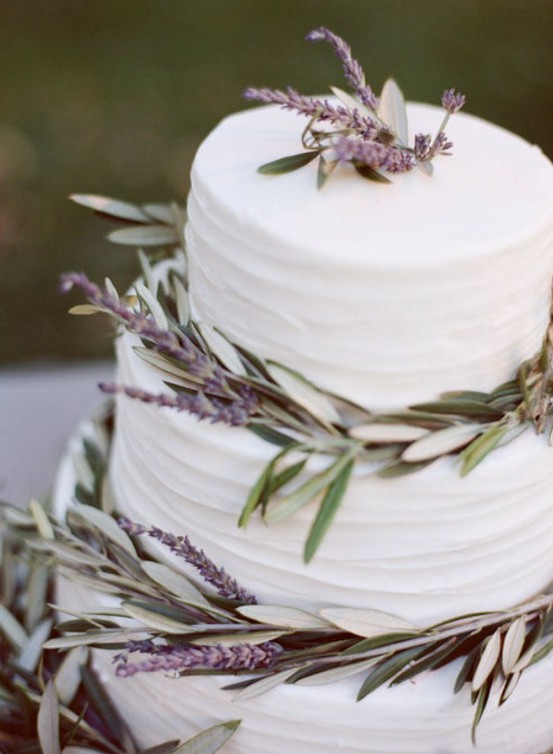
Copyright: Sarah Hirst, http://www.crescentmoonmoods.com/

Drawing inspiration from the plentiful olive groves and vines in northern Greece, you could always opt for this as your green theme. This opens up a host of possibilities. How about decorating your venue with olive branches? They can even look great on a wedding cake!   


Deck your bridesmaids out in olive green and they will look great with beautiful pink posies.

Give wedding favours of bottles of olive oil, labelled with the bride and groom's names and wedding date.

Or for the more traditional amongst you, hand out Greek boubouniera (bonbonnieres) filled with sugared almonds (koufeta). 
Whatever wedding theme you choose, you can rest assured that Crescent Moon's suppliers and hand picked venues in Greece will bring it to life.


Tuesday, 24 January 2012

The Trend for Destination Weddings is Rising

At the end of December The Association of British Travel Agents (ABTA) published their report on travel trends for the year ahead. They believe that the continuing economic crisis will lead to more couples choosing to get married abroad. Currently "one in five couples marry overseas with an average saving of £12,500 on a UK wedding; with pressures on budgets and a focus on value for money, many more couples are expected to say ‘I do’ abroad in 2012".

Another trend is that more travellers are choosing 'tried and tested' destinations. According to ABTA, "in times of economic uncertainty many people put their faith where they know best. Early booking figures for summer 2012 suggest that destinations such as France, Greece, Italy, Spain and the USA will all prove popular next year". 
Add these two trends together and it makes Halkidiki in Greece a perfect wedding destination. Let Crescent Moon create a bespoke destination wedding for you, cutting the stress and the cost of your dream day.

ABTA also predict growth in specialist holidays, such as activity and learning. Alongside this is the trend for holidaymakers seeking out locations with a strong sense of identity, with local food, entertainment and excursions being important. Look no further than Halkidiki to find high standards of cuisine and wine, made from locally grown ingedients, many of them organic. Excursions to Mount Athos, a unique location of amazing monasteries, or to the Sporades islands can be arranged. Alternatively visit local vineyards and taste award-winning wines, or go horseriding or diving. Crescent Moon can arrange a real taste of northern Greece to enrich your holiday, social or corporate event.

Thursday, 12 January 2012

Greece and the Euro

According to Businessweek, opinion polls show Greek voters want their government to do all it takes to stay in the euro, despite the austerity reforms which they may not agree with.

So despite the ‘doom and gloom’, there is really no reason for British tourists not to travel to Greece this year.

Crescent Moon can report that our suppliers in Halkidiki have strong foundations. Most of the businesses are owned and run by families who ‘made their fortunes’ generations ago and have diverse investments and strategies to withstand the recession. Rest assured that your wedding or event will still be staged with panache and any worries about a return to the drachma after paying in euros unfounded.

Photo courtesy of P.A.P. Corp

Tuesday, 8 November 2011

How is the Greek economic crisis affecting tourism?

According to The Guardian, tourism already accounts for about 18 percent of the economy in Greece. In the current economic crisis, the Greek government is making initiatives to try to lessen the impact. With approximately 52 percent of all visitors to Greece coming between July and September, priority is being given to encouraging alternative tourism which will bring visitors outside of the high season, such as agritourism and religious tourism. In order to generate foreign investment in the tourism sector Greece has taken steps to make this easier. In addition, landing and takeoff fees for aircraft have been waived and visa restrictions for non-EU citizens have been lifted.

Despite the ‘doom and gloom’ Crescent Moon can report that our contacts in Halkidiki tell us that it is business as usual for them. Not only tourists but Greeks have continued to happily holiday in the area. Perhaps because of the depressing news all the time, escapism is still high on the agenda. And what better place to escape to than the beautiful pine-clad hills and Blue Flag beaches of Halkidiki.

Around 2.335 million British nationals visit Greece every year (Source: Civil Aviation Authority). Why not join them and take advantage of beautiful scenery, excellent accommodation and great value for money. 

Tuesday, 1 November 2011

A Wedding Proposal - Ancient Greek Style

In ancient Greece the apple was sacred to the godess Aphrodite and symbolised passion. So, if a man wanted to propose to a woman he would throw an apple to her. If she caught the apple she was considered to have accepted the proposal. 

I throw the apple at you, and if you are willing to love me, take it and share your girlhood with me; but if your thoughts are what I pray they are not, even then take it, and consider how short-lived is beauty. - Plato, Epigram VII

The fruit were also expensive and therefore considered something special to give to a loved one. A couple would eat apples on their wedding night - not only a treat but because apples were associated with love.

Later, in Byzantine times, if a prince or emperor wanted to get married, the prospective brides were gathered together, and he would give a golden apple to the bride he chose.

Watch it guys - think carefully before you throw an apple!

Tuesday, 25 October 2011

Thessaloniki - a great city break and more


Thessaloniki has something for all tastes and makes a great city break prior to heading off to Halkidiki. It is the second city of Greece by size after Athens, and was the European Capital of Culture in 1997. Nestled on the Gulf of Thermaïkos on the Aegean Sea, it is a cosmopolitan city and well worth a visit. Roman ruins can be seen dotted around the centre, including the Arch of Galerius and the Rotunda, both built in the third century AD, as well as a host of Byzantine monuments and churches. Other rulers of Thessaloniki have also left their mark, the Ottomans gave the city it's most famous landmark, the White Tower.

Many of these ancient sights are easily walkable thanks to the city's manageable size. Walk to the seafront and you can you take the the locals’ favourite volta (stroll) to the symbol of the city, the White Tower. Explore the numerous cafes, bars and restaurants here or browse the wares of the street sellers. On a clear day you can see Mount Olympus on the other side of the bay.

The city has been the home of Greece's greatest musicians, artists, poets and thinkers. It has some of the finest hotels and best restaurants in northern Greece. It also has a rich culinary tradition, with restaurants serving up some mouthwatering menus. Its most traditional eateries are ‘tsipouradika’, named after the spirit ‘tsipouro’ (a bit like ‘raki’). These are small, lively places with tables packed tightly and a buzzy atmosphere.
For culture vultures there are museums. Not to be missed is the Archaeological Museum, the home of King Philip's tomb treasure, and the state of the art. For more contemporary tastes head down to the Port for the Photography and Cinema museums or the museum of Contemporary Art.

But Thessaloniki does not just have a rich history, it is a thriving modern city with a buzzing cafe culture. Go to Kitchen Bar by the Port for great views across the bay, a funky vibe and great cocktails.
Make a visit to trendy Ladadika district, the old merchants quarter of Thessaloniki. With its narrow paved streets and neoclassical buildings, mainly restored as cafes, restaurants and jazz bars, you get a taste of what Thessaloniki looked like before all the new blocks of flats were built, as well as experiencing lively nightlife.

Another part of town which comes alive at night is the Ano Poli (upper town) which nestles behind the enormous Byzantine city walls.
We at Crescent Moon suggest a city break for your hen or stag do, or as a great start to a wedding or honeymoon in Halkidiki. Contact us now to book a free consultation.

Monday, 19 September 2011

Fabulous patisserie in northern Greece


It is a little known fact outside Greece that Thessaloniki has a great tradition of patisserie. Perhaps the locals want to keep all the lovely cakes to themselves!


This springs from the fact that it was such a cosmopolitan mixture of cultures. It has always been the melting pot of Greece, with strong influences from the baking traditions of Paris and Vienna of the 19th century. Also important was the Turkish style of cake making. In the early part of the 20th century some innovative pastry chefs in Thessaloniki developed their own school of patisserie. Now the city has a zaxaroplasteio (cake shop) on every corner and luscious chocolate and cream confections are displayed in mouthwatering arrays in their windows. Indeed the huge variety of cakes and the beautiful designs are one of the trademarks of Thessaloniki. Many award winning zaxaroplasteio have branches in Halkidiki as well as in the city. To name just a few, Agapitos, Plaisir, Nikos and Terkenlis. With such expertise in luxurious patisserie, any kind of celebration or wedding cake can be made to order.

Sunday, 18 September 2011

Spas in Halkidiki

The writings of the ancient Greeks contain descriptions of bathing practices which modern spas follow today. Small bathtubs, wash basins, and foot baths were used for personal cleanliness. Greeks from as early as the 2nd century BC built public baths and showers within their gymnasiums, which were used for relaxation as well as washing. Some natural springs or tidal pools were believed to be blessed by the gods and so could cure disease. Around these sacred pools the ancient Greeks established baths for those in hopes of a cure. In Sparta a primitive steam bath was developed, known as a thermae. Early Greek bathhouses were known as balneum and were sometimes carved into the hillside from which hot springs came. In this way natural features were utilised but expanded on with mosaic floors, shelves and other decoration. The word balneum in Greek became the modern day banio, meaning bath or to bathe. 

Due to the increasing interest in relaxation and leisure in the fast paced modern world, spas are an essential part of our way of life. Water treatments are still considered the heart of the spa experience in Europe today. The spa experience is all about cleansing, heating and relaxing the body, exactly like in those ancient Greek balnea and thermae. Healing and wellbeing is still the order of the day.

Many modern spas use thalassotherapy, although developed in the 19th century at seaside towns in Brittany, is derived from the Greek thalassa meaning “sea”. Seawater was and is thought to have beneficial effects on the skin and is used all over the world. Another Greek invention, the hot tub (today often known as the jacuzzi), is used in almost every contemporary spa for relaxation.

Halkidiki now boasts some of the most unique spas in Greece:
  • Porto Carras has one of the biggest hotel spas in Europe. With two international centres of thalassotheraphy, ancient therapies are applied in a contemporary way, using seaweed, sea water and essential oils. St Barths products are used here, from the Caribbean to the Mediterranean.
Spa Pool at Meliton Hotel, Porto Carras
  • One of the most individual and calming spas is at the island hotel of Agionissi. The spectacular view from the pool looks over the Aegean towards Ouranopoulos on the Greek mainland. It is a magical place full of quirky antiques and tasteful furnishings. The products used are exclusive to this hotel spa and the others in the P.A.P. Corp stable. Just Pure is a range of products based on phases of the moon.
Agionissi Spa
(Courtesy P.A.P. Corp)
  • At the Danai Beach Resort there is an abundance of marbled luxury. Surrounded by lush Italianate gardens, guests relax only a stone's throw from the beach. Now open all year round, the spa is a haven of peace and quiet. The Danai spa also uses St Baths range.

Danai Beach Resort & Spa
(Courtesy of Leading Small Hotels of the World)
  • The Sani resort has a variety of spas spread through the Beach Club, Asterias Suites and Porto Sani Village. Soothing treatments are designed by Anne Semonin and Apivita whose natural products are used in all therapies.
    Spa at Porto Sani Village
    (Courtesy of Sani Resort)
    

Thursday, 8 September 2011

Wedding Traditions of Greece

The Greek Orthodox wedding ceremony starts with the bride being escorted into the church by her father. The expectant groom stands by the alter waiting with the Koumbaros (best man). After the priest's introduction, he blesses the rings and places them on the fingers of the bride and groom.
Two stefana (metal crowns or floral wreaths) are put on the heads of the couple by the Koumbaros while the couple holds hands. The stefana is a symbol of God bestowing his blessings in the form of crowns. The crowns are generally connected by a ribbon to symbolize the couple's eternal bond as husband and wife. The stefana are swapped from bride to groom's head 3 times.
During the marriage service the couple receives lighted candles to hold. This is followed by religious readings and the wedding party take communion wine. The couple is then walked around the altar three times to represent their everlasting journey. During the circling the guests throw rice onto the couple, symbolising fertility. The stefana are then removed and the couple declared married.
In earlier times it was traditional for the the women to get together and wash the bride's dowry. The men would parade the couple's furniture down the village streets to their new home. In some mountain villages the bride's embroidery and jewellery were displayed on horseback at the head of the wedding party to the church before the marriage service.
At the reception, a bonbonierra (bag) containing an odd number of koufetta (sugared almonds) are given to guests as wedding favours. The odd number symbolizes the couple’s unity since odd numbers cannot be divided.
The famous Kalamatiano or “Circle dance”, involves two circles that form around the bride while guests throw money at the musicians and in some regions break dishes for good luck.
It is a tradition in Greece to break a pomegranate on the ground at weddings. It is a symbol of abundance, fertility and good luck.

Wednesday, 3 August 2011

Sithonia

The second finger of Halkidiki is much more rugged and mountainous. Roads are windy for the first part then become more gentle as the coastline gets flatter. The coastal road drive is stunning, with little bays coming into view around every bend. You are surrounded by the lush greenery and the smell of the pines (pefka) is ever present. Choose a different beach every day, and even the very popular won't be unpleasantly packed, especially during the heat of the day. Greeks head for the beach generally in the late afternoon, after the main heat of the day has gone. In fact many will be just arriving when the "mad dogs and Englishmen" are packing up for the day. Halkidiki's beaches are mostly sand or shingle. What makes them so great is the lack of crowds and the crystal clear water.

Thursday, 28 July 2011

THE AREA


Halkidiki is a peculiar land formation consisting of three parallel peninsulas, known as 'fingers' . This makes for an incredibly long coastline and many varied beaches. There are distinct differences between the three peninsulas.

KASSANDRA

The first and nearest to Thessaloniki international airport is Kassandra. It's nearness to the airport and the city means that this is the most popular and developed of the three 'fingers'. The “neck” of Kassandra is flat but it starts to rise as you move down the “finger”. Famous for it's pine trees (pefko in Greek, as in Pefkohori meaning 'pine village') and beautiful beaches. Here you will find many cosmopolitan resorts that blend modern and traditional with natural beauty.

As you drive down the Perimitri Kassandras (main coast road) you are surrounded by lush vegetation and a riot of colour from the many flowering bushes and trees. The villages are mainly built along the main road, although not exclusively and some of the more interesting are worth diverting to. Check out Afitos with it's stone-built houses and stunning views.

Steer away from the main centres on Kassandra like Kalithea where there seem to be wall to wall fur boutiques, tacky tourist shops and packed streets.